Paid ads, and a straight answer about what they did.
Google, YouTube and Meta. A click is something you pay for. An enquiry is something you can put in the diary. Most accounts are set up to produce the first, because nobody ever built a way to count the second.
- Month to month, no lock-in
- Your own dedicated strategist
- An eight-week strategy plan up front
- Fortnightly reporting in plain English
What paid advertising is.
You pay a platform to put your business in front of somebody: either at the moment they search for what you sell, or in front of the kind of person who tends to buy it. You are charged when they click, not when they see it. The ones who scroll past cost you nothing.
That is the entire mechanism. Everything after it is decisions: which searches are worth paying for, what a customer is actually worth to you, where they land when they click, and how you find out which part of it worked. Those decisions are the job. Left undecided they get made for you by the platform’s own suggestions, which are written by the company that gets paid per click.
It is the fastest way to get enquiries and the fastest way to waste money, and it is the same lever.Why nobody should set it and forget it
Switched on and left alone, an account spends its budget on whatever is easiest to spend it on. That is not a fault in the system; it is the system working exactly as intended, on behalf of somebody who is not you.
Google, YouTube and Meta, plus the tracking that shows what each one returned.
Search. Somebody types what they need and you are there. It is the only channel where the person has already told you what they want, which is why it is almost always where the first dollar goes.
Video, before and during what somebody is already watching. Cheap to reach a lot of people in one area, and the right answer when nobody is searching for you yet because they do not know you exist.
Facebook and Instagram. Nobody there is looking for you, so the ad has to earn the attention, but you can put it in front of a very particular kind of person in a very particular postcode, and it is the best of the three at that.
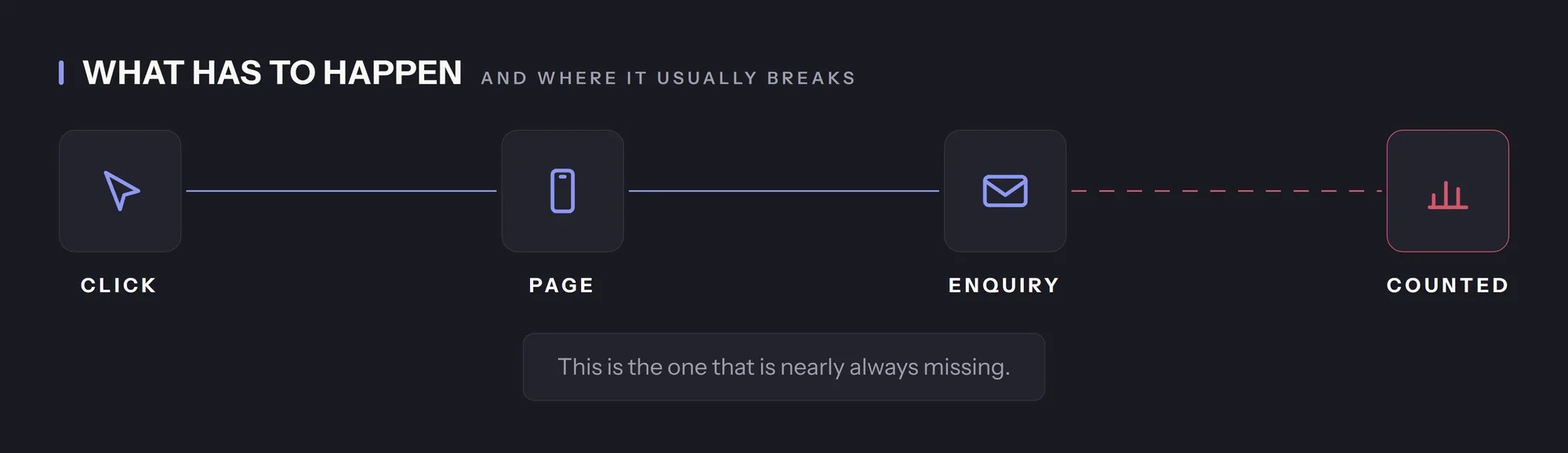
Calls, forms and bookings traced to the ad that caused them. This is the one that is nearly always missing, and without it every other decision above is a guess with a spreadsheet attached.
Who this is for.
- Owner-operated businesses Where the person deciding the budget is also the person running the place, and has neither the hours nor any reason to become an expert in this.
- Anyone already spending and quietly unsure The invoice arrives every month and nobody can say which part of it is working. That is the single most common situation I am called into.
- Businesses where one customer is worth a lot An early learning enrolment is worth tens of thousands over the years a family stays. When that is true, being wrong about the advertising is expensive in both directions.
Why me.
- The person you spoke to is the person running it There is nobody here to hand your account to after you sign. That is the whole shape of the business, not a growth stage.
- I worked in the industry before I advertised to itfive years in outside school hours care. I know what a Monday actually looks like from behind the desk, which is not something you can learn from a case study.
- Never a percentage of your ad spend A percentage fee pays me more when you spend more, which is exactly the wrong incentive to hand the person advising you on budget.
- No minimum ad spend imposed Most agencies will not take an account under a few thousand a month. That is a rule about their overheads, not your account. The one floor I hold is the honest one: my fee should never exceed what you spend on the ads themselves.
- Every price is published The audit, the monthly management and the off-season option are all priced below, on this page, before we ever speak.
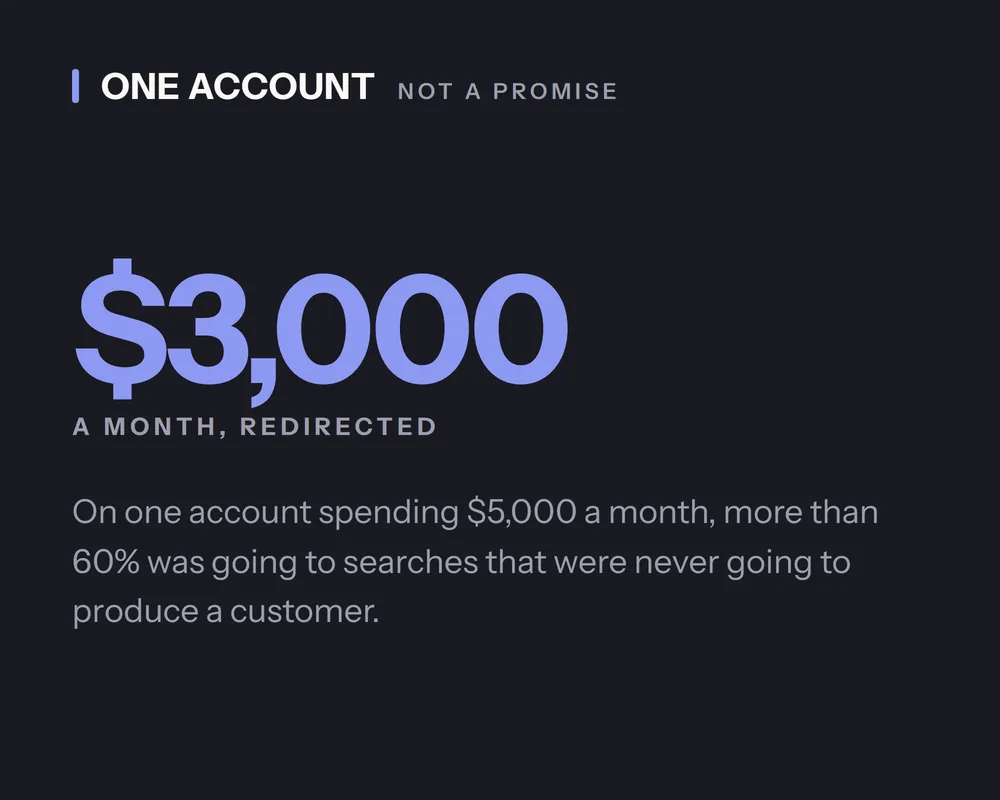
60% was going to searches that could never produce a customer
$3,000 a month saved
$36,000 a year saved
That is one account, not a promise. What yours would look like depends on what you sell and who else is bidding.
DiscoveryWeek 1
A call, and access to what already exists. What you sell, what it is worth to you, how many customers you can actually take, and what the account has been doing while nobody was looking.
Measurement before anything elseWeek 1–2
Before a single ad changes, the counting gets fixed: calls, forms and bookings all traced back to what caused them. Doing this second is how accounts get rebuilt on a hunch.
Rebuild and launchWeek 2–3
The structure, the wording, the places it shows and the long list of searches that were quietly costing you money. Live by the end of week three.
The quiet stretchWeek 3–6
Google’s bidding needs a few weeks of real results before it is any good, so this is where patience earns money. Judging an account in week two is how people abandon something that was about to start working.
Steady stateMonth 2 onward
Changes every week, a plain written update every fortnight: what it cost, what came back, what I changed and why. If a fortnight was poor you hear it from me before you work it out yourself.
Three options, and what each one costs.
The ad budget itself is separate and stays on your own card, billed to you by the platform directly, decided with you, never marked up on the way through.
one time
A written report on your own ad account. Where the money is actually going, what isn’t being counted, and exactly what to change, in dollars, not charts. Yours to keep and yours to action; you implement it, not me.
If you move to ongoing management within thirty days, the $750 comes off your first month. In writing, credited once.
per month
Everything done for you, every month.
- Never a percentage of what you spend
- No minimum ad spend imposed, but my fee should never exceed what you spend on the ads, and I will say so if it would
- Month to month. No lock-in and no minimum term
- The account is in your name and stays there
per month
The pause option, instead of cancelling. For seasonal businesses in their quiet months: the account stays warm, the history stays intact, and when somebody searches your business’s name it is your ad they find there, not a competitor’s.
What you spend on the ads themselves is entirely your call. For most small businesses it starts somewhere around the cost of one new customer a month and goes up only when it is clearly working.
The prices are on the table. The call is for whether the work fits what you need.
Is there a minimum ad spend?
Not one I impose. Most agencies will not take an account under two or three thousand dollars a month, which quietly rules out most good small businesses. That threshold exists to cover an agency's overheads, and I do not have theirs.
The one floor I do hold is the honest one: my fee should never exceed what you spend on the ads themselves. Below that line monthly management costs more than it can move, and I will say so before you pay me. The audit is the right buy at that size, not a retainer.
How much should I be spending on the ads?
Work backwards from what a customer is worth. If a new one is worth several thousand dollars to you over the time they stay, you can afford to pay a lot more for a click than a business selling something once.
The honest answer for most small businesses is: start smaller than you think, get the counting right, and increase it once you can see what comes back. Nobody sensible sets the number before that.
How long before it works?
Live inside three weeks. Genuinely settled at about six.
The gap is not padding. The platforms bid on your behalf using recent results, and until they have collected a few weeks of those they are guessing. The most expensive mistake I see is somebody switching everything off in week two because it looked bad, when it was about to stop looking bad.
What is the difference between Google, YouTube and Meta?
Intent. On Google somebody has typed what they want, so you are answering a question that has already been asked. On YouTube and Meta nobody is looking for you, so the ad has to interrupt something and earn the next five seconds.
That makes search the safest first dollar for almost everyone, and the other two worth adding when either there are not enough searches to buy or people do not know your kind of business exists.
Do I need a new website first?
Usually not. Usually the page needs to load faster and say the right thing in the first screen, which is a much smaller job than a new site.
If the site genuinely is the problem I will say so rather than sell you clicks into it, because paying for visits to a page that loses people is the most expensive mistake in small business marketing. I also build them, so treat that advice with the appropriate suspicion and ask me to show you the numbers.
Who owns the account?
You do, from the first day, and that is not negotiable from my side. It is set up in your name with your billing on it, and I am given access to it the same way an accountant is.
If we stop working together you keep the account, the history and everything built in it. An agency that owns your advertising account owns your ability to leave.
What happens if I stop?
You tell me, we finish the month, and I take my access off. There is no exit fee, no notice period and nothing to unwind. The ads keep running exactly as they are until you or somebody else changes them.
Fifteen minutes. I will have looked at what you have now before we speak, so it is a conversation and not a pitch.